
Stablecoins are designed for fast settlement, global use, and smooth movement across exchanges, wallets, and DeFi platforms. That speed is valuable, but it also makes one question more important than ever:
“Can this wallet be trusted before we issue or redeem tokens?”
Most issuers depend on KYC and transaction monitoring. Both are necessary, but they don’t reveal much about the wallet itself—its age, behaviour, or on-chain connections. This is where wallet screening and trust scoring add real value.
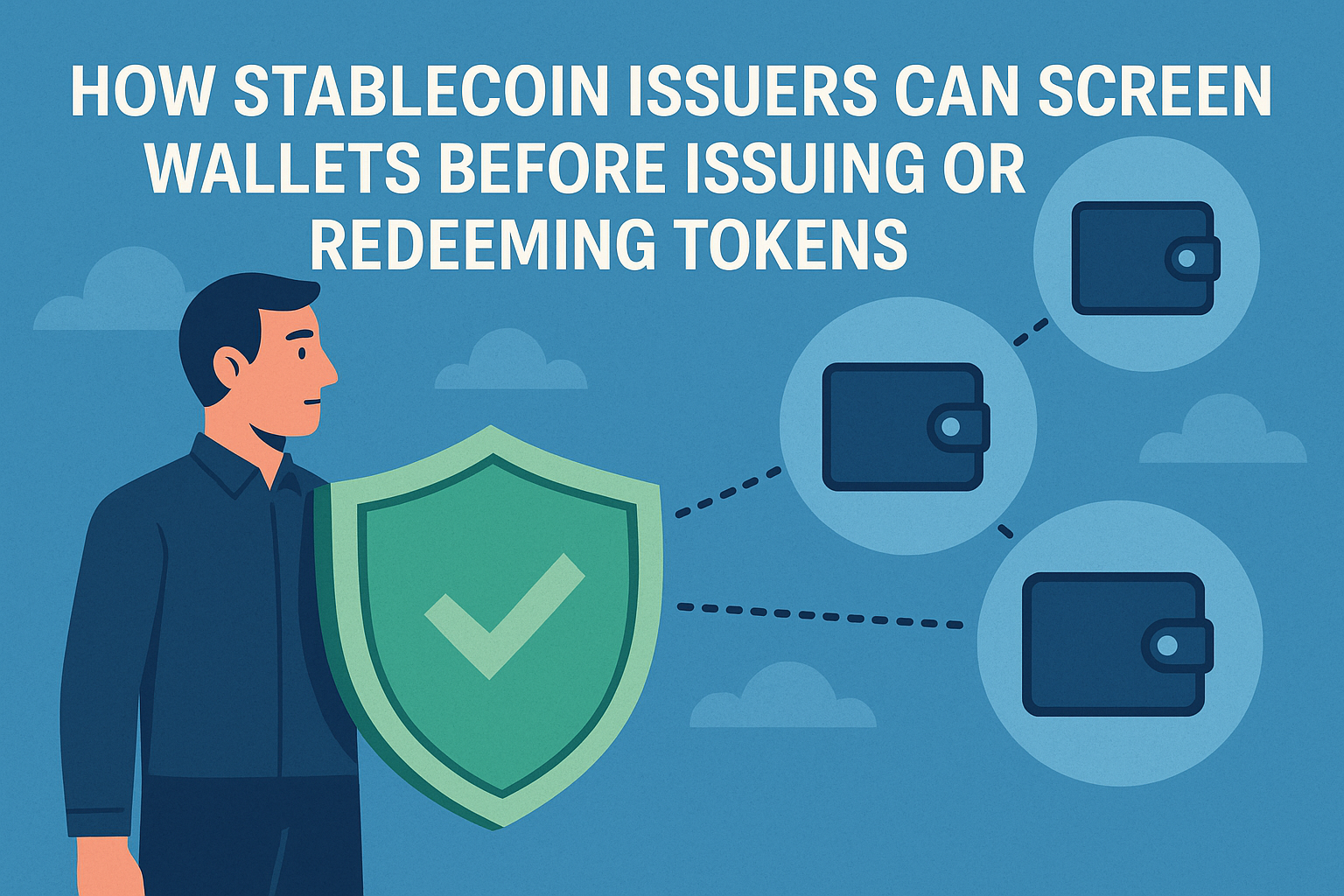
This guide explains how issuers can screen wallets before minting or redeeming, and how a tool like WalletTag can be added without changing existing systems.
🔗 Want the short version?
See our dedicated page: Stablecoin Wallet Scoring API for Issuers & Payments
Why KYC Is Not Enough
KYC verifies identity, but it does not show:
- How old the wallet is
- Whether it interacts with mixers or risky services
- If it has links to wallets flagged for scams or hacks
- Whether it resembles a group of wallets created for farming or abuse
A fully verified user can still send funds to a high-risk wallet. A partner or merchant wallet may appear compliant but behave suspiciously on-chain.
Wallet screening fills this gap by answering:
“Based on on-chain behaviour, how trustworthy is this wallet?”
What to Check When Screening Wallets
You don’t need a complex internal analytics team. Strong screening can be built from a few core signals.
1. Wallet Age and Activity
- New wallets (minutes or hours old) carry higher risk, especially for large mints or first-time redemptions.
- Consistent long-term activity usually signals lower risk.
Questions to consider:
- Should a 5-minute-old wallet follow the same rules as a 5-year-old one?
- Should large requests from new wallets be limited or reviewed?
2. Links to High-Risk Addresses
Risk signals include:
- Interactions with blacklisted wallets
- Transfers to or from mixers
- Connections to wallets involved in hacks, scams, or exploits
Strong links to known bad actors should trigger additional checks.
3. Transaction Behaviour
Behaviour over time often reveals intent:
- Large inflows from risky sources
- Spreading funds across several wallets
- Repeated use in airdrops, cashback, or reward loops
This matters even more if your stablecoin is used for incentives.
4. Cross-Chain Behaviour
A clean wallet on one chain may have a risky counterpart on another.
Stablecoins that operate across multiple networks benefit from a combined view of wallet activity.Where to Add Wallet Screening
You can add screening at key points without redesigning your system.
1. Before Minting (Issuance)
Typical flow:
- Complete KYC/KYB
- Screen the destination wallet
- Use the score to:
- Approve
- Approve with limits
- Send for review
- Reject
This protects you from minting into obviously risky wallets.
2. Before Redemptions or Large Withdrawals
Redemptions are common exit points for bad actors.
Screen for:
- Wallet age
- Behaviour
- Links to blacklist or malicious addresses
Large or high-risk requests may require lower limits or manual review.
3. Merchant and Partner Onboarding
If partners or PSPs handle your stablecoin:
- Score their treasury or payout wallets
- Use the results to set limits
- Adjust collateral or guarantee requirements
- Decide monitoring levels
How WalletTag Helps Issuers
WalletTag is a trust-scoring API that fits cleanly into these steps.
You send a wallet address.
WalletTag returns:
- A Trust Score
- A risk category (Low, Medium, High)
- Supporting signals (age, activity, blacklist data, etc.)
You apply your own rules on top of that score, based on your risk tolerance.
Examples:
- High score: Approve automatically
- Medium score: Approve with limits or extra verification
- Low score: Block or review
Simple Integration (Conceptual)
- User requests mint
- Backend:
- Validates KYC/KYB
- Calls WalletTag
- System approves, adjusts, or blocks the request
- Decision is logged for compliance
No changes are required to your core smart contracts.
Building Trust With Regulators and Partners
If you operate in regulated markets or expect to move into them, wallet screening becomes a strong compliance advantage.
You can demonstrate:
- How many high-risk wallets were blocked
- Why limits were applied to specific transactions
- Evidence for compliance or investigations
This makes wallet-level controls a core part of your risk framework.
Next Steps
If you issue a stablecoin or run a payment product that relies on one, now is the right time to adopt wallet-level screening. You don’t need a large internal risk team—an API-based approach can deliver immediate improvements.
Explore the Stablecoin Wallet Scoring API
See how WalletTag can screen wallets before you issue, redeem, or reward stablecoins.